

Advice & Support with LGBTQ+ Breakups & Separation
When considering LGBTQ+ Relationships that may be - or are - coming to an end: what does a counsellor advise? Some relationship endings are unforeseen, surprising and painful, but some are mutually planned. Breakups and separations may be difficult for any relationship, and they may not simply be about two people walking away. Counselling assists a couple in making mutually necessary arrangements for their separation.Help with Separation…
A common misconception about couple counselling is:-“…it’s designed to make couples stay together!”
Nope!
(You can read more misconceptions about couple counselling here…)
You see, having worked 27 years as a counsellor, 18 of them focused on gay, lesbian, bisexual & queer couples, I can most definitely tell you that relationship counselling is not about making a couple (or group) stay together!
The outcome the couple wants from counselling is the outcome we’ll work towards. Even when outcomes change during counselling, a perfectly valid thing to happen, a good relationship counsellor will assist the couple in considering any change of direction they want to take.
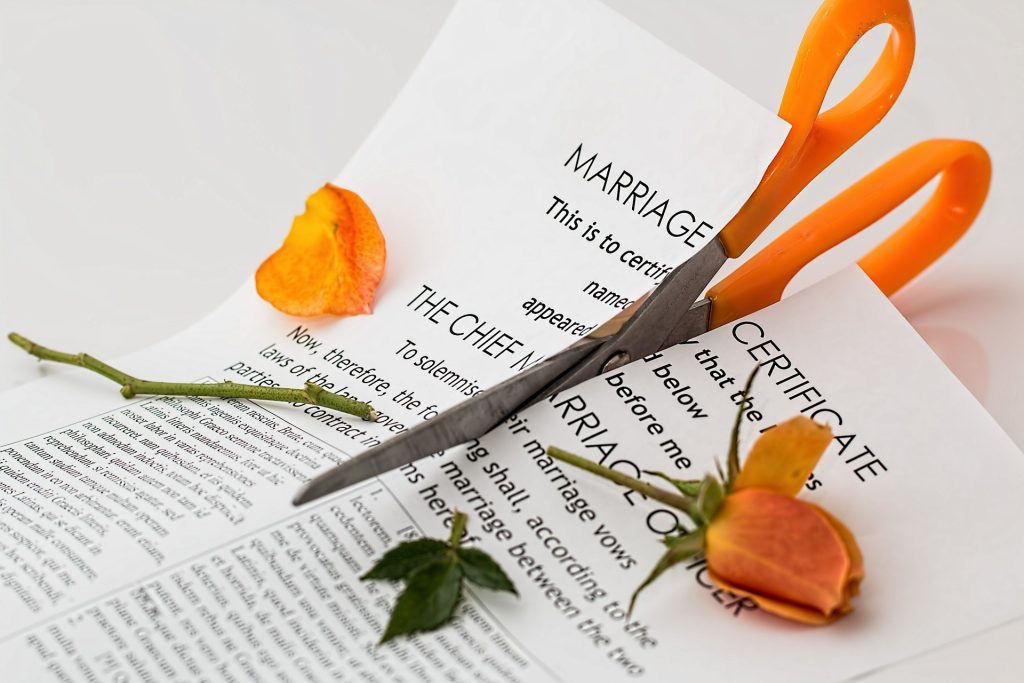
Relationship Separation Advice
Counselling is not quite “how to separate a gay couple“!
The initial part of relationship counselling assists the couple in deciding what they want to achieve from their relationship (assuming they didn’t already know; discussions in session can reveal and inspire new desires).
This might be to discuss separation, it might be to discuss the behaviour leading to separation.
Sometimes several sessions are dedicated to helping the couple figure out what they want together. It’s not always a straightforward decision, and the decision can be reviewed countless times during the course of counselling. But once we reach a direction agreeable to the couple, planning and working through how we make their needs a reality begins.
Talking can be Relieving.
LGBTQ+ Counselling for Relationship Separation can become an effective and rewarding process for partners who wish to investigate and/or organise the end of their relationship. With professional support they can separate from their relationship successfully and, should the need arise, familiarly… according to their needs and circumstances.

Managing a Relationship Breakup
During their time together, a romantic/intimate relationship may have attained arbitrary joint assets (their record collection, for example), but it may have also gained more significant assets, such as property, children, their pets, joint responsibilities outside of the relationship, and so on.
Planned and Unplanned
Consider that not all breakups happen because one or both partners decides to end their relationship. Death/terminal illnesses, career opportunities, family situations, etc. can all bring about an unplanned ending to the relationship. Separation, planned or unplanned, needs sensitivity and understanding.
When a relationship has to come to an end, the relationship’s breaking up, and dealing with joint assets can be the last thing on the partners’ minds. But it is a major task to complete, and many relationships choose to tackle this together.
Counselling for Relationship Separation can assist a couple in supportively & respectfully working through a breakup. The process can help to decide which matters belong with whom and what matters may continue to be the responsibility of the two (or more… if a polyamorous relationship) partners going forward.
Some partners pay lawyers to detail their concerns at an expensive hourly cost. Other partners decide to work through the list themselves, with an experienced relationship-breakup facilitator such as a couple counsellor.
A Relationship-End Shock
When you learn that your relationship has ended, the idea of using counselling to process separation (either alone or with your ex-partner) may not be welcome… initially.
Maybe you thought a problem was becoming resolved, and then you learnt that your partner was not being honest. Upon learning the truth, your first shock reaction might be to end the relationship. This condition is not unusual and is understandable due to shock.
The situation is also where a couples counsellor can help you (and your partner, together) look at what has happened with cool, clear eyes. The facts may not change, but your ability to process and make informed decisions can change.
What made you “dump him” could later be seen as something you could both work through, rescuing or transforming the relationship into something more than it was. And this can include the possibility of a separation, too.

Why Separations may be Painful
Relationships that are ending badly also see people who have stopped communicating effectively.
Relationship breakups can be painful largely because effective communication between partners has broken down.
When communication deteriorates, misunderstandings increase and unresolved issues accumulate. Partners may stop expressing needs clearly, avoid difficult conversations, or assume unintended negative intent. This can create increasing emotional distance and frustration, as each person feels unheard or misinterpreted. Over time, the lack of clear, honest dialogue may erode trust and connection, making the relationship feel unsafe or unsustainable.
The pain of the breakup itself is intensified because communication often fails at the point when it is most needed.
Instead of working through problems collaboratively, partners may withdraw, become defensive, or communicate only through conflict. Important feelings and explanations are left unsaid, leading to confusion and lingering questions after the relationship ends. This absence of effective communication can prevent closure, prolong emotional distress, and make it harder for individuals to understand what went wrong and how to move forward.

On Death or a Terminal Diagnosis
Not all separations are unexpected or unplanned.
Some separations (or the ending of a relationship) occur as a result of death or the diagnosis of a terminal illness.
A couple might not have planned to say their final goodbyes to each other. Certainly, some couples may not be able to consider such planning (to say goodbye) at the time of receiving devastating news but may benefit from assistance in handling such hot and painful topics (a concept that the psychotherapist, Irvin Yalom, referred to as “striking while the iron’s… cold”).
Counselling can be embraced by partners facing separation due to death or a terminal diagnosis because it provides a structured and supportive space to communicate openly at an extremely difficult time.
A relationship counsellor will assist partners in expressing their fears, grief, love, and unresolved concerns that may otherwise remain unspoken, reducing regret and emotional isolation.
Through a helpful framework that the couple can construct with their counsellor, they can strengthen their emotional connection, clarify wishes, and find meaning and comfort in their remaining time together through focused conversations.
This process supports healthier grieving, contributes to a sense of completion, and helps both partners feel heard, understood, and emotionally supported as they face the impending separation.

How Relationship Counselling Begins
First Session(s)
Initially, the partners meet with their counsellor to discuss their relationship problems. Right at the start of the session, Dean will be helping the couple make an informed decision about their use of counselling. Once the safeguarding process is completed, Dean and the partners begin discussing what might become the primary focus of their counselling work. This focus may be about dealing with matters the relationship has to sort out for them to be able to walk away, for example.
The first session (or sometimes a handful of sessions) includes evaluating whether the partners and the counsellor can work well together.
We notice if we’re able to work with what’s on offer. The first session(s) may naturally merge into subsequent sessions without a formal declaration of completion, or we may pause our work to discuss alternative approaches (or services) that might better suit the couple’s needs.
Subsequent Sessions
Each subsequent session usually begins with the invitation: “What do we need to focus upon today?” This puts the couple’s autonomy and inspiration in charge of leading the session.
Matters that have come up since the last session are often a beneficial starting place.
We may discuss the previous week’s homework (see later), any new difficulties that the couple has encountered, or any new learning and decisions that have been made since the last session.
Post-Session Homework
Counselling for relationships can be about identification:
- identifying the focus,
- identifying relating conflicts/difficulties
- Identify processes that get in the way of resolution (e.g., defences, historic experiences, etc.).
And whilst sessions can regularly include some practice (how to transform what we’re identifying), there is also oodles of time for experimentation and transformations outside of the session: we call this homework.
The counsellor doesn’t actually set homework for the couple, like a schoolteacher does. The partners will be invited to identify together what they need to deal with before the next session. After a while the couple become independently skilled at identifying homework for themselves.

How Counselling Comes to a Close
If a primary aim in relationship counselling is to empower the partners to make their own relationship-ending decisions together, then an equally important aim will be empowering the partners to make their counselling come to an end too.
A couple, throuple or group does not have to be in separation counselling until every problem regarding their separation is resolved.
No; by practicing the therapeutic techniques they developed in session with Dean, the partners create and use their own developing approach to managing endings in their relationship, too.
Once partners in counselling recognise that they can bring a relationship, aka the counselling relationship, to an end autonomously, the need for further counselling sessions diminishes.

Using Two Video Devices
Because this service makes excellent use of video technology (Counsellor Dean Richardson has more than 19 years’ experience), this may suit separating partners, as they don’t have to meet in person, and the counsellor is present at every meeting.
Dean’s original focus as a couple counsellor was working with Long Distance Relationships (i.e. partners being in different countries from each other would have to use one device each).
Empowering talk at home
The technology means that Dean’s particular approach empowers separating relationships to be able to talk with each other about subjects they couldn’t usually manage “at home”.
Difficult subjects – especially the theme of bringing the relationship to an end – became more accessible due to the use of multiple video devices and remote sessions.
Any mix of Smartphones, tablets, PCs, Macs, etc. works.

Counsellor Dean Richardson MNCPS(Accred/Reg) 🙋♂️
Of course, you could choose any British-based online couple / throuple / group counsellor…
Yet, given that this will be the most intimate and vulnerable you could be alongside your partner(s), you would want a skilled professional whose experience and specialism you could trust and whose focus would be upon your distinct relationship. Your couple, throuple or group relationship will be in good hands with Dean. He works from Great Britain, is independent of "box 'em/shift 'em" therapy services that you've probably seen advertised, and identifies as a specialist gay relationship counsellor. He's also easily payable in pounds sterling (rather than another country's currency)! Dean already had an impressive 19 years actual video "webcam" experience - way before the first pandemic began in Britain (when suddenly many counsellors added a brand new video option to their portfolio out of nowhere, having never practised online previously 🤔).
What makes Dean Distinct
- Dean is sensitive and effective to your sexuality / gender identity and intimate ways of relating to each other. You'll discover quickly that Dean is an informed member of your own community.
- Dean demonstrates adept skills with lesbian, gay, bisexual, asexual, fluid, non-bonary, mixed-sexuality and same-or-mixed-gender relationships, having over 27 years' experience as a counsellor.
- Dean avoids taking on the role of "all-knowing expert" (whether requested or projected onto him by the clients). "Experts" tell you what to do, do not learn very well from others, and struggle to adapt to new situations. A good relationship counsellor is curious and adaptive and asks questions from a "not knowing" position so that the partners in front of him benefit from re-examination.
- Dean speaks plain English (and can swear like a virtuoso if you like, or not at all if you prefer). He works cooperatively with your relationship (no unnecessary silence or just "hmms..." continually).
- Dean was originally accredited by his first professional body 17 years ago; he is now an accredited registrant with the National Counselling and Psychotherapy Society. Accreditation is a valued recognition of a counsellor's substantial experience. Dean is also a member of the Psychotherapy and Counselling Union of Great Britain.
- Dean is a British counsellor working from the South of England. Unlike other counselling services operating from abroad Dean is registered, accredited, insured & supervised from within England.

If any of this resonates with you and your partner(s), you should probably meet with the Gay Relationship Counsellor: Dean Richardson MNCPS(Accred/Reg) via Zoom, Teams, Whatsapp and other secure, reliable video conferencing media.
Dean focuses on LGBT/QIA+ relationships as a speciality in therapy. He works with individuals, couples and small groups. Plus, he's qualified to a postgraduate level (Chichester PG Diploma in Psychodynamic / Systemic Couple Counselling, IGA National Foundation in Group Counselling), and works as a private practice counsellor employing 27+ years experience*.
(*Very Important: not all counsellors have such specific skills for working with couples nor groups. Those who are initially trained to use common "Individual" Counselling skills have no experience in working therapeutically with relationships. Such counsellors may try, perhaps out of misplaced goodwill, to employ "individual" techniques (multiplied by 2) but the couple or group will find that the approach is ineffective. Simply put: it's the wrong approach; your relationship is not part of the counsellor's primary theoretical framework. Remember always to ask your potential counsellor: "what qualifies you to work with our relationship?" and trust your instincts based on what you hear.

Further information to help…

Got a Question about LGBT/QIA+ Counselling?
Come and ask... whatever question you have about couple and/or group counselling for gay, lesbian, bisexual, aromatic, asexual and mixed-orientation relationships you might have, get in touch today to discuss your needs…
Private Counselling Services Designed for the LGBTQ+ Community. Available Exclusively to Gay, Lesbian, Bisexual, ASexual, ARomantic, Mixed & Queer Couples, and Established Polyamorous Groups - serving the UK Nationwide over Zoom, Microsoft Teams, Google Meet & WhatsApp Video, reaching locations in and around central Havant, Petersfield to Waterlooville, Cosham to Portsmouth & Southsea, Southampton to Chichester, Fareham to Gosport, Hayling Island, Emsworth, Westbourne, Rowland's Castle, local residents anywhere in between and regularly further afield!